Executive Summary | Street Food as Infrastructure
Street food trends is no longer simply a culinary experience—it is becoming an innovation infrastructure for North American foodservice and retail. What began as informal, hyper‑local cooking traditions has evolved into a scalable system for introducing global flavors in ways that feel accessible, affordable, and culturally relevant. In this context, includes not only traditional street vendors but also modern food trucks—mobile, chef-driven formats that bring global flavors to consumers in accessible, on-the-go ways.
Multiple data streams point to the same conclusion. Nearly three‑quarters of global consumers intend to maintain or increase street food consumption in the next six months¹, while retail and menu data show accelerating translation of street‑inspired dishes into frozen foods, snacks, sauces, and ready‑to‑cook meals. Together, these signals suggest that street food has crossed an important threshold: from trend to repeatable innovation model. For manufacturers and operators navigating cost pressure, flavor fatigue, and consumer demand for novelty without risk, street food offers something rare— permission to experiment within familiar formats.
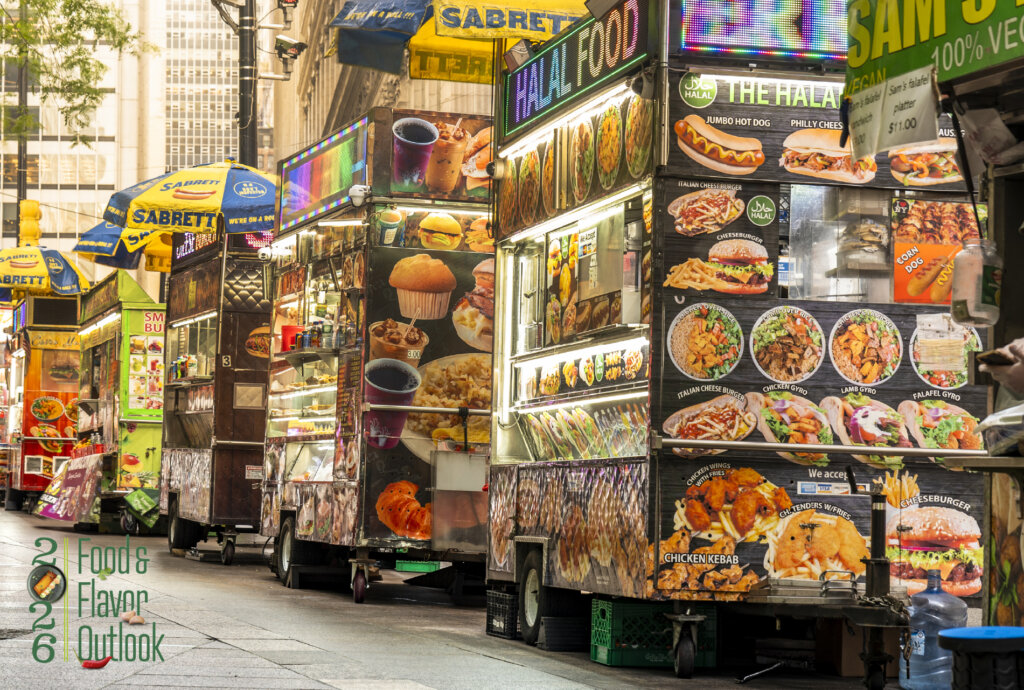
From Format to Framework: Why Street Food Trend Endures
Global street food trend’s sustained relevance is not accidental. Research consistently identifies four reasons consumers choose street food:
- Convenience
- Value
- Enjoyment
- Novelty2
These motivations align precisely with modern eating behavior: fragmented meal occasions, on‑the‑go consumption, and a desire for excitement without complexity. Importantly, street food delivers novelty without asking consumers to change how they eat. The hand‑held, portable format does the work of translation.
Street food isn’t just shaping menus—it’s reshaping how global flavors reach mainstream consumers. As a demand grows for bold, portable, and affordable experiences, it has become a repeatable innovation model, where familiar formats make global discovery feel effortless. What starts curbside—from tacos to bao to birria increasingly finds its way onto menus and into retail.
This is why tacos, bao, kebabs, empanadas, and falafel continue to outperform more formal global dishes. They operate as cultural bridges, pairing unfamiliar flavors with instinctively understood formats.
Global Flavor Discovery is Becoming Everyday Behavior
Street food’s momentum is inseparable from the normalization of global flavors in North America.
- 45% of U.S. consumers purchase international prepared foods3
- 66% of Canadian consumers buy sauces specifically to explore global cuisines3
These behaviors indicate that global flavor exploration has shifted from special occasion to routine habit. Sauces, seasonings, and street‑inspired meals function as low‑risk entry points—allowing consumers to explore without committing to unfamiliar techniques or ingredients.
Street food thrives in this environment because it is already designed for adaptation. Its origins are practical, flexible, and responsive to local tastes—qualities that translate cleanly into modern product development.
Retail is Where Street Food Scales
The strongest signal that street food is evolving into an innovation platform appears in retail.
In the United States alone, frozen street‑food formats reached $543.5 million in sales and grew 26% over two years4. These products re‑engineer vendor‑style dishes into grocery‑friendly formats such as:
- Handheld frozen meals
- Globally inspired snacks
- Ready‑to‑cook kits
This growth confirms an important shift: consumers don’t just enjoy street food outside the home—they expect it to follow them home. Retail becomes the second act, not the afterthought.
Tacos as Proof of Concept
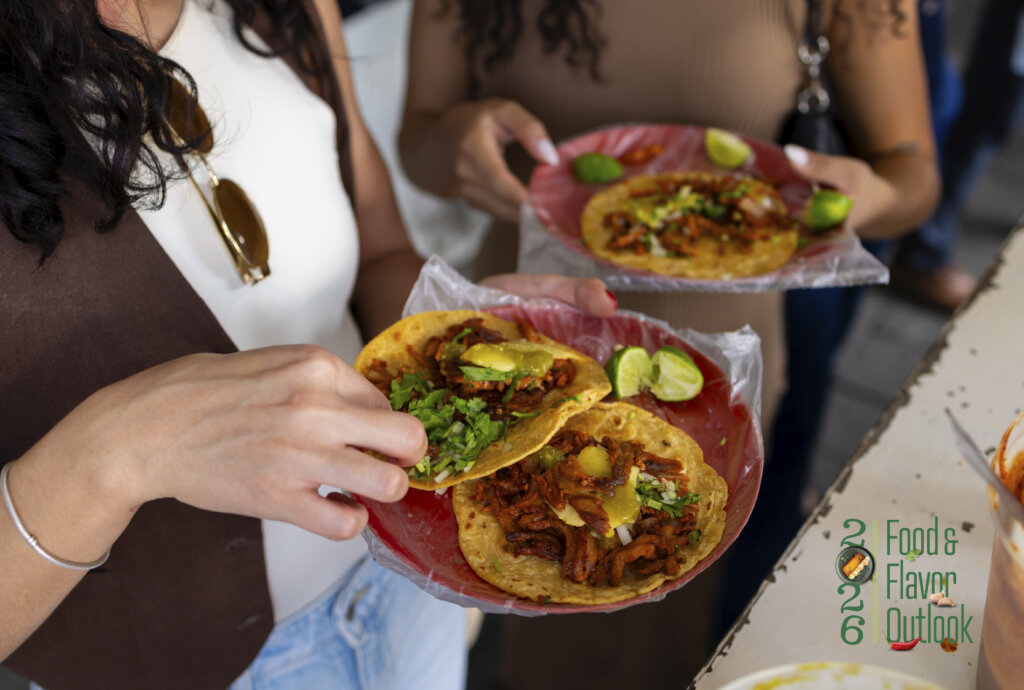
No format illustrates street food’s scalability better than tacos.
- Taco sales in frozen street‑food categories grew 54%4
- Consumers eat tacos across every major eating occasion4
- Birria taco menu appearances increased ~1,900%4
Tacos demonstrate how regional specificity can coexist with mass appeal. Their success is not tied to a single flavor or protein but to the structural flexibility of the format itself. This is precisely what makes street food so valuable to innovation pipelines.
Ingredient Signals: What’s Changing on the Plate
Food‑truck menu analysis reveals that street food innovation isn’t only about dishes—it’s also reshaping ingredient usage. Between Q4 2023 and Q4 2024, the fastest‑growing food‑truck ingredients included:
- Chocolate (+35.3%)
- Lemon (+16.7%)
- Sour cream (+15.8%)
- Sweet potato (+11.8%)
- Gravy (+10.3%)5
These ingredients frequently appear in layered, high‑contrast flavor systems, reinforcing street food’s role as a testing ground for bold combinations that later migrate into packaged and menu formats.
Four Signals That Street Food Has Become an Innovation Platform

- Familiar formats reduce risk: Handheld, recognizable structures make global flavors more approachable.
- Consumer demand for global flavor is sustained, not episodic: Purchasing behavior confirms everyday engagement with international tastes.
- Retail adoption proves scalability: Frozen and ready‑to‑cook growth shows street food can move beyond foodservice.
- Menus preview what’s next: Explosive growth in dishes like birria tacos highlights how regional foods scale rapidly once they hit the right format.
Street Food Is No Longer a Trend — It’s the Infrastructure Behind Global Flavor Innovation
Street food has always reflected local creativity. Today, it does something more strategic: it solves the innovation paradox—how to deliver novelty without alienation.
For food companies navigating compressed timelines and rising expectations, street food is no longer inspiration alone. It is infrastructure: a proven system for translating global culinary discovery into products consumers already know how to love.
FlavorIQ® Food & Flavor Outlook Program
At Griffith Foods, we turn insights and culinary creativity into new opportunities with our FlavorIQ® Food & Flavor Outlook Program. Through our annual culinary theme program, we curated a list of key culinary themes that reflect the food industry’s current state and our prediction for what’s next. Learn more about our program and themes here.
The future of food is not just about what’s on the plate—it’s about the story behind it. At Griffith Foods, we’re ready to partner with you to write the next chapter in wellness innovation, blending insights, sustainability, and culinary creativity to deliver meaningful impact.
Let’s Create Better Together
We’re here to help inspire creations that keep your product portfolio on-trend. Contact your Griffith Foods representative or reach out to our sales team to learn more about our ongoing research and innovative offerings.
Sources
- Datassential Street Food Report
- Mintel Regional and International Cuisines – US, 2025
- [Regional and International Flavors and Ingredients – US (5.1)], Mintel: Cooking Sauces, Pasta Sauces and Marinades – Canada
- Datassential, Foodinstitute.com, Mintel, TikTok
- Technomic
AI SUMMARY
Street food is becoming a scalable innovation platform for North American foodservice and retail. With 73% of global consumers planning to maintain or increase street food consumption¹ and frozen street‑food sales reaching $543.5 million in the U.S.⁴, street food offers a practical structure for introducing global flavors through familiar, portable formats.