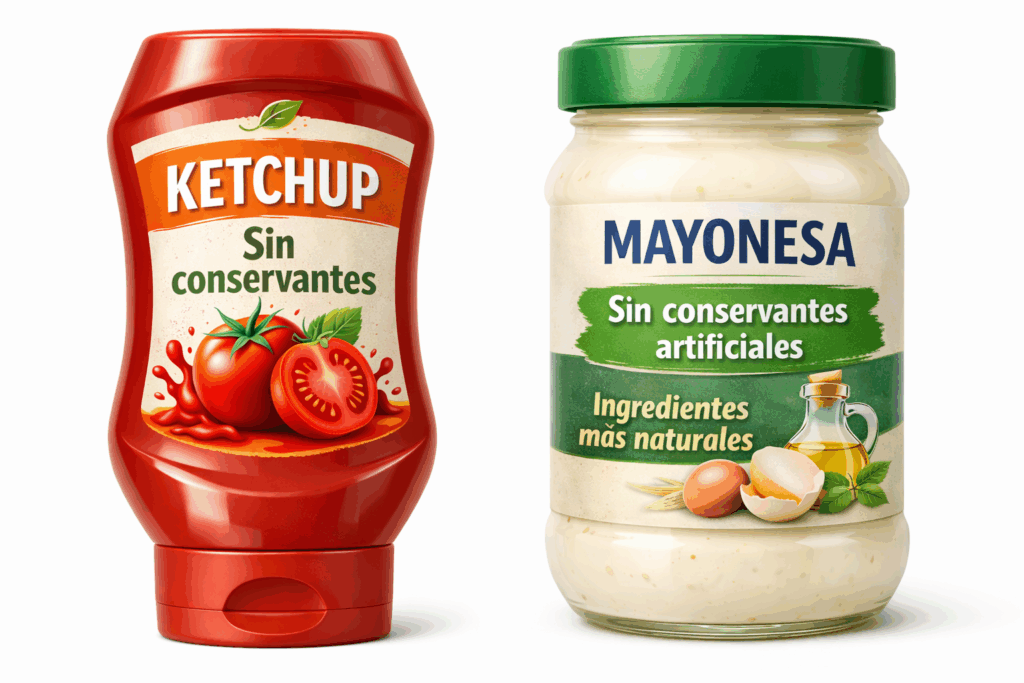
In the sauces and dressings category, the shift toward more natural offerings is no longer only a positioning decision. Increasingly, it is an explicit consumer expectation: simpler labels, recognizable ingredients, and clear messages such as “no preservatives” or “no artificial additives”.
Natural preservation = greater trust, perceived wellness and quality
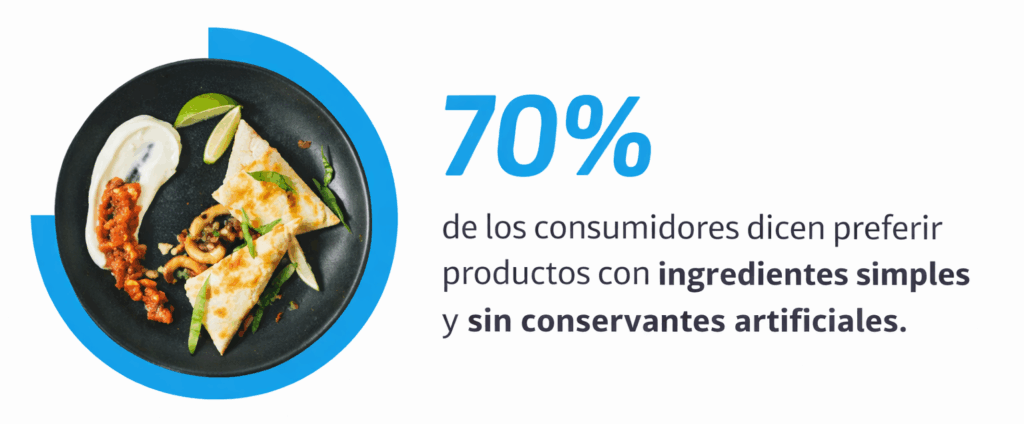
According to recent studies in Latin America, more than 70% of consumers say they prefer products with simple ingredients and no artificial preservatives. These attributes are directly associated with greater trust, wellness, and perceived quality.
At the point of sale, this message is read quickly and strongly influences purchasing decisions.
However, behind what appears to be a simple claim for consumers lies a significant technical challenge.
The real challenge is not the claim, it is preservation
Removing artificial preservatives in sauces and dressings cannot be solved simply by adjusting a formulation. It requires rethinking the entire preservation system of the product, considering variables such as:
- Microbiological stability throughout shelf life
- Interaction between pH, water activity, and the product matrix
- Impact on the sensory profile over time
- Processing and distribution conditions
- Regulatory and communication feasibility in each market
In practice, many brands discover that the challenge is not formulating a “more natural” product in the lab, but ensuring that the formulation is stable, replicable, and scalable, without compromising safety, consistency, or sensory attributes.
What we are seeing in the market today
Across different markets in the region, it is already possible to observe how brands are responding to this consumer expectation.
In Latin America, explicit claims such as “no preservatives” or “no artificial preservatives” are becoming increasingly common, supported by cleaner formulations.
In Brazil, where regulations limit the use of certain claims, the approach has shifted toward products with simpler ingredient profiles and a more subtle but still strategic communication of naturalness.
In foodservice and quick-service chains, the challenge expands further: it is not only about the claim, but also about maintaining standardization, shelf life, and operational performance across multiple markets.
These examples show that the movement toward natural solutions is real, but there is no single way to address it.
Our approach: designing the solution from the beginning
In our work with brands, manufacturers, and operators, we have learned that advancing toward more natural sauces and dressings requires an integrated approach.
Instead of “replacing” artificial preservatives at the end of the process, we design sauces and dressings that integrate from the start:
- Natural preservation adapted to each product matrix
- Microbiological validation and shelf-life studies
- Application-based risk evaluation
- Alignment with regulatory and communication frameworks in each region
This approach allows the development of sauces and dressings that respond to consumer expectations without compromising the product’s technical foundations.
Beyond the claim
For consumers, reading “no preservatives” sends a clear signal.
For brands, the real value lies in sustaining that promise over time with products that remain safe, stable, and consistent.
Moving toward more natural offerings is not an isolated decision. It is part of a broader evolution in how products in the sauces and dressings category are designed, validated, and communicated.
And like any well-executed evolution, it begins with technical expertise, market knowledge, and solutions designed to work in real-world conditions.
Explore our sauces and dressings with natural preservation designed to maintain flavor, safety, and shelf life.
Discover more about our naturally preserved sauces and dressings
Click here to receive information for the Andean Region (Colombia, Ecuador, Peru)
Click here to receive information for Brazil
Click here to receive information for Central America
Let’s create the best together.